
Mabamba Wetlands is a 100-sq-km marsh, a crucial Important Bird Area (IBA) and a Ramsar site protecting a unique bird and aquatic biodiversity. The extensive Mabamba Bay Wetlands is a community-run initiative that coves the entire north-west shores of Lake Victoria near Entebbe.
Mabamba Wetland is Uganda’s prime birding hotspot known for its reliable chances to encounter the prehistoric Shoebill, a key highlight on Uganda birding tours here. Other swamp specialists here include a wide variety of migrant waders and a collection of Lake Victoria biome-restricted bird species.
Mabamba Wetland’s convenient location near Entebbe/Kampala makes it an easy birding hotspot to visit on a half-a-day or full-day-tour by birdwatchers, family groups, photographers and generalists to encounter the prehistoric Shoebill that occur here.
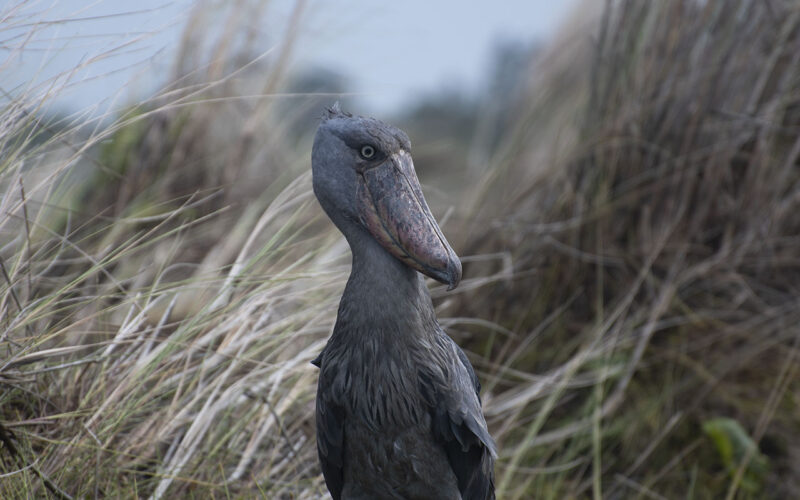
Shoebill Birding at Mabamba Wetlands
The Shoebill is a dinosaur-era species, a rare resident of remote and secluded wetlands. Standing at about 1m tall, the Shoebill (Balaeniceps rex) is neither a stork or an eagle, although it shares a few attributes, but is now a sole member of Balaenicipitidae, a monotypic African family. It is a solitary species often encountered alone, only pairing up during breeding season and when with young.
Across its remote wetland habitats, the Shoebill is a top predator, feeding mainly on lungfish, catfish and other crustaceans. Its unique hunting style of motionless stalking has earned the Shoebill, a “statue” name. – where they have been observed stalking their prey motionless for a long time and when prey comes in range, striking with lightning speed. Even then, the Shoebill has about 50% of hunting success.
The Shoebill is classified as vulnerable on IUCN red-list and continues to face challenges from habitat conversion for agriculture, pet traders and competition from fishermen.
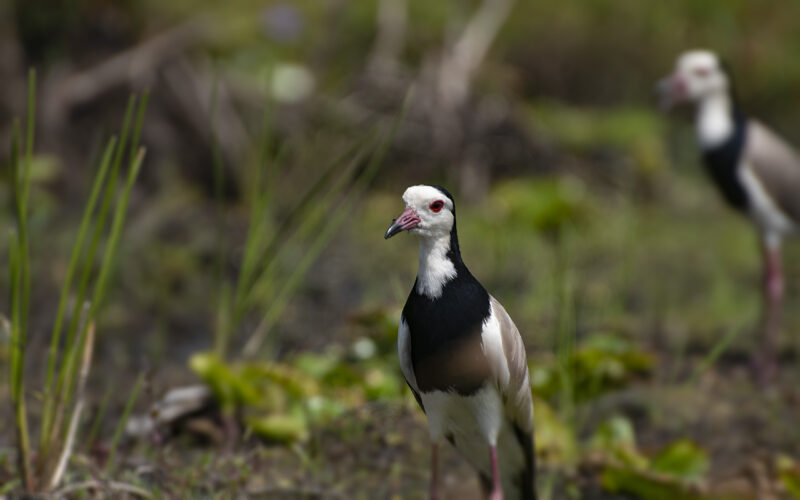
Other bird highlights when birding at Mabamba Wetlands
Mabamba wetlands lie entirely in Lake Victoria biome where vegetation types range from wetlands/marshes, open water and sedges hosting a variety of biome restricted bird specialists that birdwatchers look out for in this unique to this habitat. These biome restricted species include; the Papyrus Gonolek, White-winged Swamp Warbler, Northern Brown-throated Weaver, African Pygmy Goose, Caruthers’s Cisticola, Blue-breasted Bee-eater, Blue-headed Coucal, Greater Swamp Warbler, Lesser Jacana and more.
Resident wetland specialists include Malachite and Pied Kingfishers, Winding Cisticola, African Jacana, Long-toed Lapwing, Cape Wagtail, Fan-tailed Widow, Red-chested Sunbird, Common and Lesser Moorhen, gigantic Spur-winged Goose, Purple Swamphen, Yellow-billed Duck, White-faced and Fulvous Whistling Ducks, Saddle-billed Stork, Purple and Grey Herons.
The marsh is utilized by Palearctic migrants that include millions of White -winged Black Terns, Common-winged Plover but other African migrants pass through wonder through including the Olive Bee-eaters and the rare Blue Swallow from south. Raptors include African Marsh Harrier, Black Kite, African Fish Eagle, White-backed Night-Heron and the seasonal Osprey.
A full-day birding tour at Mabamba explores the agricultural lands and forest patches along the marsh edges producing a superb checklist including; Great-blue and Ross’s Turaco, Lizard Buzzard, Woodland Kingfisher, Crowned Hornbill, Red-eyed Dove, Eastern Plantain-eater, Black-headed, Slender-billed, Viellot’s and Village Weaver among others.
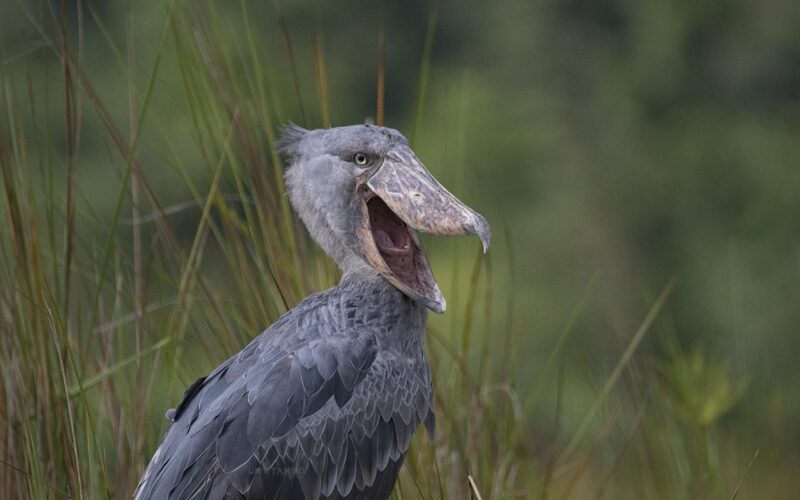
Essential information on Shoebill Birding at Mabamba Wetlands
-
How to get to Mabamba Wetlands
Mabamba wetlands lie 40 km or 2-hrs drive west of Entebbe, following a well maintained marram road. Birding excursions begin at Mabamba fishing landing site that host a community office where the guides and canoes can be obtained for the activities.
A quick alternative route uses a scheduled ferry crossing at Nakiwogo landing at Buwaya village from where the Mabamba fishing village lies some 15-km away.
An even shorter alternative for travelers with short time on their hands is to take an arranged motorized canoe from Nakiwongo landing site where for 45-mins across the Lake Victoria Channel, you will arrive at Mabamba marsh edges to be picked up into a smaller canoe to further explore this wetland.
-
Birding duration and Fees at Mabamba Wetlands
Birding expereince at Mabamba are guided by community guides where they access the vast mash with motorised canoes. Duration range from as short as 1.5hrs to birding special trips that range up to 4 hrs (this attracts different rates). Fees include; local tax, entrance, community guide, canoe hire and range from 50 USD per person or 30 USD shared between 2 and 3 pax in each canoe. Note the canoe into the marsh is allowed to carry up to 3pax maximum capacity.
Featured Birding Tours to Mabamba Wetlands
Mabamba Wetlands is a major hotspot explored as a Day-outing featuring on almost all Uganda Birdwatching Tours due to its high chances to encounter the prehistoric Shoebill, great accessibility and its proximity to Entebbe and Kampala City.
- One Day Mabamba Swamp Birding Tour
- One-Day Shoebill Photography Tour at Mabamba
- 13-Days Best of Uganda Birding Safari
- 15-Days Uganda Birding and Primates Safari