
Important Bird Areas in Rwanda are designated and protected essential sites for their crucial ecological importance to bird biodiversity and local flora and fauna. These Important Bird Areas (IBAs) which vary in size and habitat, form a network or range for the critical viability of naturally occurring bird populations ensuring their sustenance. Important Bird Areas are qualified following an international criterion led by local government/NGO environmental agencies in partnership with Birdlife International.
Rwanda’s Important Bird Areas are top birding hotspots spanning a wide diversity of habitats where a checklist of 750 bird species occur. This impressive country’s checklist include 29 Albertine Rift Endemics (ARE) various montane rainforest specialists, range-restricted and biome specialists and generalist species.
Important Bird Areas of Rwanda
The most Important Bird Area in Rwanda is the Albertine Rift Zone, a rich biodiversity area known for high concentration of endemism notably the mountain gorillas, golden monkey among other impressive flora and fauna. This ecological span a wide variety of habitats including; ancient montane rainforests, high-altitude wetlands, Afro-tropical rainforest covered mountain ranges and lakes. Other IBA’s are covered with a mix habitats from savanna dotted woodlands to grasslands surrounded by heavy cultivation.
Below is a list of IBAs explored during our classic Rwanda Birding Safari.
-
Nyungwe Forest National Park
Stretching over 1019km2 across the eastern wall of the Albertine rift, Nyungwe Forest is Rwanda’s premier birding hotspot and an Important Bird Area supporting a checklist of up to 320 bird species. This impressive checklist includes up to 29 Albertine rift Endemics, montane species, and Afrotropical species. Nyungwe Forest is the oldest rainforest in Africa characterized by dense montane forest, bamboo zone, high-altitude marshes and steep mountain ridges.
Nyungwe Forest is a popular bird-paradise for birdwatchers targeting the localized Albertine Endemics where highlights include; Red-collared Babbler, Dwarf Honeyguide, Albertine Sooty Boubou, Grey-chested Babbler, Regal Sunbird, Purple-breasted Sunbird, Kugwe Apalis, Handsome Spurfowl, Neumann’s Warbler, Dwarf Honeyguide, Grauer’s Warbler, Yellow-eyed Black Flycatcher, Strange Weaver, Blue-headed Sunbird and more
Nyungwe Forest boasts a network of excellent birding trails that explore various macro-habitats and altitudinal variations for local specialists. Here is a detailed blog on birding expereince and what to expect from this birding hotspot.
-
Akagera National Park
Located in the eastern region of Rwanda, Akagera National Park is an Important Bird Area (IBA) and a major birding hotspot boasting a wide range of habitats with an impressive checklist of over 500 bird species. One of the key habitats in Akagera NP is the unique Zambezian Miombo biome, a broad-leafed woodland section and a paradise for restricted bird species on their northern range limit.
Key woodland bird highlights include; Tabora Cisticola, Southern Black Flycatcher, Miombo Wren Warbler, Souza’s Shrike, Ruaha Chat and the Red-faced Barbet, an East African endemic. Other quality species include; Slate-coloured Boubou, Green-winged Pytilia, Emerald-spotted Wood Dove, Greater Honeyguide, Narina Trogon, Red-throated Wryneck, African Grey Hornbill, Stout Cisticola, and the elegant Lilac-breasted Roller, Green-capped Eremomela, Cabani’s and Cinnamon-breasted Buntings.
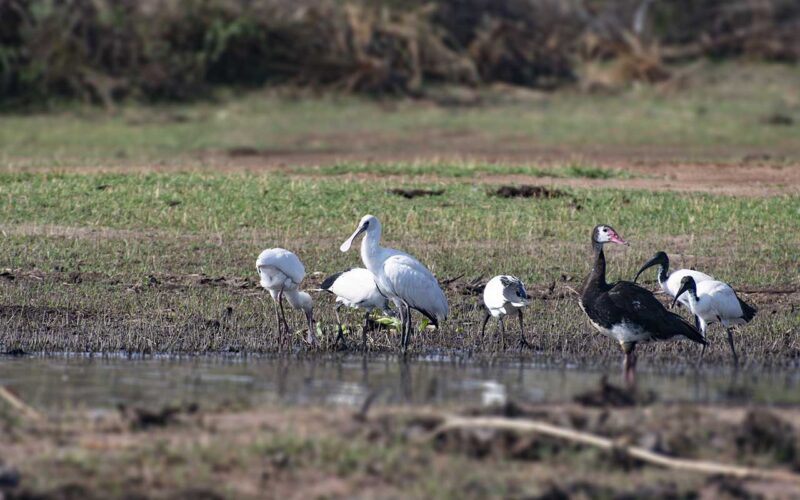
Akagera National Park other bird-rich habitats include vast grassland and savanna plains, woodlands and an extensive wetlands and lakes fed by Kagera River that support an impressive associated bird species. Lake Ihema located on the park’s southern edges supports an important bird breeding sanctuary of most waders.
-
Rugezi Wetlands
Rugezi Swamp is Rwanda’s only Ramsar site stretching over 20-km long and surrounded by towering terraced hillsides in the country’s north-west region near Volcanoes National Park. Lying at an altitude of about 2100m, Rugezi Wetlands was recognized as an Important Bird Area in 2001 by Birdlife International as a breeding stronghold for the Grauer’s Swamp Warbler (Bradyterus graueri) an Albertine Rift and White-winged Swamp Warbler.
Rugezi Wetland complex includes several high-altitude lakes, rivers and is an important water catchment area characterized by papyrus and reed habitats supporting up to 120 bird species checklists.
Key bird highlights at Rugezi Swamp include, White-winged Swamp Warbler, Grauer’s Swamp Warbler, Highland Swamp Warbler, Papyrus Yellow Warbler, White-backed Duck, Purple Swamphen, Saddle-billed Duck, Yellow-billed Duck, Greater Swamp Warbler, Grey-capped Warbler and more. The marsh is a stronghold and a breeding ground for the Grey-crowned Crane.
-
Akanyaru Wetlands
Straddling the Rwanda and Burundi Akanyaru wetland is an Important Bird Area and a Ramsar candidate that comprises a mix of papyrus, reed and other marsh habitats that support up to 54 bird-checklist. Akanyaru wetland complex is fed by river Akanyaru which form an extensive swamp belt of over 63km including Lake Chohoha before it discharging into Nyabarongo river and into Akagera river.
Akanyaru wetlands key bird highlight include; Papyrus Gonolek, White-winged Swamp Warbler, Papyrus Yellow Warbler, Blue-headed Coucal, Striated Heron, Greater Swamp Warbler, Squacco Heron and the rare Madagascar Pond-Heron. The luxuriant vegetation and wooded habitats on the wetlands edges host, Mackinnon’s Fiscal, Thick-billed Seedeater, Red-chested Sunbird, Baglafetch Weaver, Streaky Seedeater, Western Citril, White-collared Olive back, Black-crowned Waxbill and more.
Wildlife include Sitatunga and a Spotted Otter.
-
Nyabarongo Wetlands
Nyabarongo wetlands are a vast 142.62 square kilometer complex ecosystem of marsh and lakes fed by river Nyabarongo. These extensive wetlands include the Bugesera and Gashora marshes lying about 1-hour drive south of Kigali City.
Nyabarongo Wetlands with its mix of habitats support over 150 species of birds where key highlights include; Papyrus Gonolek, White-winged Swamp Warbler, Papyrus Yellow Canary, Squacco and Purple Heron, Purple Swamphen, White-Collared Oliveback, Blue-headed Coucal, Slender-billed Weaver, Northern brown-throated Weaver, Greater and Lesser Swamp Warbler and more.
The woodlands that flank the marsh area host; Black-headed Gonolek, Orange-breasted Bushshrike, Ruppell’s Starling, Mackinnon’s Fiscal, Yellow-breasted Apalis, Blue-spotted Wood Dove, Palm-nut Vulture and African Fish eagle.
-
Kigali City and Surroundings
Kigali City is an impressive birding destination boasting numerous and accessible natural urban green parks, restored wetlands that offer an excellent introduction to Rwanda bird diversity. Collectively these ecosystems are Important Bird Areas supporting localized bird species unique to these habitats.
Key birding hotspots to visit on a day-birding outing while in Kigali include Nyandungu Eco Park and Umusambi Village both restored wetland habitats with excellent birding trails and macro habitats. Others include Lake Nyarutarama, Bugesera and Gashora Wetlands south of Kigali City. Here is detailed birding blog on Kigali birding hotspots and what to expect.
Other Rwanda Important Bird Areas (IBAs)
- Volcanoes National Park
- Gishwati and Mukura National Park
- Chamudongo forest