
Queen Elizabeth National Park located in the western Uganda is a premier birding hotspot supporting a rich diversity of habitats with a staggering checklist of 606 bird species. Covering an area of 1978 sq-km, Queen Elizabeth National Park lies along the Albertine Rift Valley floor, poked by over a dozen crater lakes and overlooking the towering Rwenzori Mountain Ranges. This Uganda’s second biggest national park is named in honor of Queen Elizabeth 2 that visited here in 1954.
Queen Elizabeth National Park is a highly accessible birding destination located along and right in the middle of Uganda’s premier birding circuit which explores the specie-rich Albertine Rift Area. Serviced with a varied range of excellent accommodation facilities, Queen Elizabeth NP ranks on top of birding hotspots that feature in our Uganda Classic Birding packages.
Beyond birding, Queen Elizabeth National Park offers excellent wildlife viewing opportunities while on game drives and boat cruise safari along the Kazinga Channel while chimpanzee trek expereince is offered in the nearby Kyambura Gorge and Kalinzu Forest.
Key Birding Hotspots and Highlights in Queen Elizabeth NP
Queen Elizabeth National Park’s wide variety of habitats include extensive wetlands surrounding Lake George and Kazinga Channel, which are recognized as a Ramsar Site and Important Bird Area (IBA’s) for their importance to bird diversity. Elsewhere, the park is covered with open grasslands blending into moist savanna woodlands and tropical rainforests. The park’s over-a-dozen saline volcanic lakes attracts millions of migrating Palearctic and continental wader species.
Other exciting hotspots to explore while birding in Queen Elizabeth NP include transitional zones between savanna grasslands and wetlands, woodlands and open water habitats which are utilized by a wide range of bird species.
In this guide below we explore each habitat and likely highlights to encounter while birding here.
-
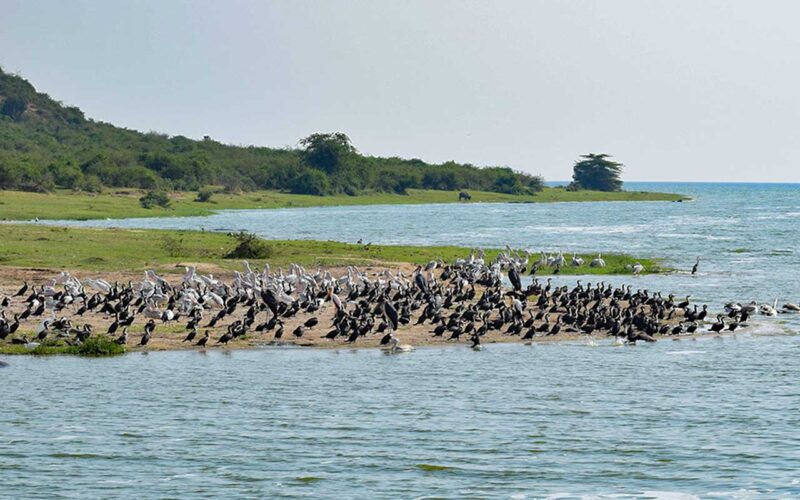
Birdwatching on a boat cruise along the Kazinga Channel in Queen Elizabeth NP
The Kazinga Channel is a prime birding hotspot known for a diversity of species and wildlife. A birding boat cruise trip here begins from Mweya jetty, following the woodland-lined channel edges to the mouth of Lake Edward, where large congregations of waders occur.
Key bird highlights here include; African Skimmer, African Spoonbill, Great White and Pink-backed Pelican, Lesser and Greater Flamingos, Great Cormorant, African Darter, Yellow-billed Stork, Egyptian Goose, Goliath Heron, African Jacana, Long-toed Lapwing etc.
The woodland channel edges host; Lesser-masked Weaver, colonies of Village Weaver and Vielloet’s Black Weaver, Slender-billed Weaver, Swamp Flycatcher and hunted by Pied, Malachite and Giant Kingfishers. Dozens of African Fish Eagle take up posts along the channel with pairs of the opportunistic and fruit eating Palm-nut Vulture.
Other highlights include; Grey-headed and Blue-breasted Kingfisher, White-throated Bee-eater, Angola, Mosque White-tailed and Lesser Stripped Swallow, African Plain Martin and more.
Papyrus specialists include; the elusive White-winged Swamp Warbler, Carruther’s Cisticola and Papyrus Gonolek while the Shoebill breeds further north around Lake George.
-
Birding the Mweya Peninsula and Kasenyi Grasslands of Queen Elizabeth NP
The Mweya and Kasenyi area is covered in mixed bush, woodlands and euphorbia-dotted savanna grasslands on Kasenyi plains towards Lake Gorge in the north.
Key bird highlights include; Senegal Lapwing, Temminck’s Courser, Kittlitz’s Plover, Crowned Lapwing, Grassland Pipit, Red-necked Spurfowl, Rufous-naped and Red-capped Larks. Orange-breasted Bushshrike, Blue-naped Mousebird, Black-crowned Tchagra, Greater Honeyguide, Ruppell’s Starling, Striated Kingfisher, Red-headed Weaver, Black-headed Gonolek, Lesser Masked Weaver and Lilac-breasted Roller. Raptors include; Martial Eagle, Bateleur, Brown and Black-Chested Snake-Eagles while the Yellow-billed and Red-billed Oxpeckers can be seen following buffalo herds.
-
Birdwatching the Ishasha Road Woodlands
The Ishasha road is a 70km stretch that branches off near the Uganda Wildlife Headquarters along Kasese-Mbarara highway to run through the extensive acacia woodlands interspersed by open grasslands and southern forest edges of the vast Imaramagambo Forest.
Key bird highlights here include; Bearded Woodpecker, White-headed Barbet, African Grey Hornbill, Green Wood-hoopoe, African Grey Woodpecker, Nubian Woodpecker, African Paradise Flycatcher, Red-faced Crombec, Yellow-bellied Hyliota, Yellow-breasted Apalis, Eastern Black-headed Oriole and Common Scimitarbill. The colorful Lirac-breasted Roller, Meyer’s Parrot, Little Bee-eater, Black-lored Babbler, Bocage’s Bushshrike, Grey-Penduline Tit, African Pygmy Kingfisher etc.
The African Cuckoo and Red-chested Cuckoo are passage migrants through these woodlands.
Raptors include; Long-crested Eagle, Black-shouldered Kite, Black Sparrowhawk, African Goshawk, Little Sparrowhalk, Verreaux’s Eagle-Owl, Wahlberg and Tawny Eagles while Lesser-spotted, Steppe and Booted Eagles migrate through here.
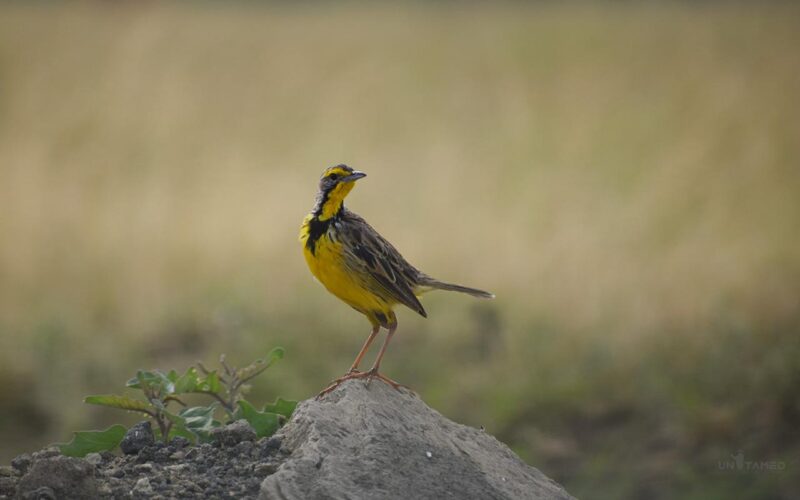
The open moist grasslands host a selection of Euplecets species including; Red-collared Widowbird, Yellow-mantled Widowbird, White-winged Widowbird, Yellow Bishop and Southern Red Bishop. Sooty Chat, Yellow-throated Longclaw, Singing Cisticola, Stout Cisticola, Wing-snapping Cisticola, Grey-backed Fiscal occur. Seedeaters include large flocks of Cardinal Quelea, Pin-tailed Whydah etc.
-
Birding the Ishasha Sector
Birding into Ishasha sector located on the southern edges of Queen Elizabeth NP adds onto our checklist a diverse collection of species from extensive grasslands, woodlands, riverine and wetlands habitats. The grassland host seasonal migrants of; Harlequin and Common Quails and the dashing African Crake and the resident Common Button Quail.
Vultures are well represented at Ishasha grasslands and include; Lappet-faced, White-headed, Griffin’s, White-backed, Ruppell’s and Hooded Vultures.
The extensive wetlands host a Black Crake, Black Coucal, Purple Swamphen, African Openbill, Saddle-billed Stork, White-faced Whistling Duck, Grey Heron, African Jacana and more.
A birding outing in Ishasha grassland plains offers incredible sighting of the popular tree-climbing lion prides here.
-
Birding the Katwe, Munyanyange and Bunyampaka Salt Crater Lakes
The saline Lakes of Katwe and Munyanyange along the western edges of Queen Elizabeth NP attract millions of Palearctic migrants and African migrants. These seasonal long-distance migrants come to refuel on the algea-fested saline waters before continuing their voyage. Congregations include varieties of sandpipers, various terns and more waders. Lake Bunyampaka and other saline crater lakes also attract seasonal thousands of Lesser Flamingos and Greater Flamingos.
-
Birding the Imaramagambo Forest
The vast Imaramagambo Forest which sits along the eastern escarpment wall offers of Queen Elizabeth NP is another excellent birding hotspot offering typical forest specialists. Excellent trails here explore the forest edges, into the primary section all the way past crater lakes.
Key bird species include; Congo Pied Hornbill, Blue-mantled Crested-flycatcher, Brown Illadopsis, Blue-throated Brown Sunbird, Blue-breasted Kingfisher, Narina Trogon, Red-bellied Flycatcher, Crowned Hornbill, Jameson’s Wattle eye, Equatorial Akalat, Hairy-breasted Barbet, Lesser Honeyguide, Blue-shouldered Robin-chat, African Green Pigeon, Great Blue Turaco, Olive Long-tailed and Dusky Long-tailed Cuckoos, Yellow-billed Barbet, Red-headed Malimbe, Black-billed Weaver and more.
Recommended Birding Itinerary to Queen Elizabeth National Park
A birding duration to Queen Elizabeth NP depends on the visitors expereince, how much time on hand and how many other birding hotspots will be visited on this Uganda tour. A 2 to 3 full-days of a full Uganda Classic Safari is enough somehow exhaust a fraction of varied of bird-rich habitats for a mouth-watering checklist.
Birders with fewer days on their hands yet looking for a wide range of diversity in a small area, Queen Elizabeth NP is a perfect destination and an excursion up to 6-days and you can tailor in chimpanzee treks.